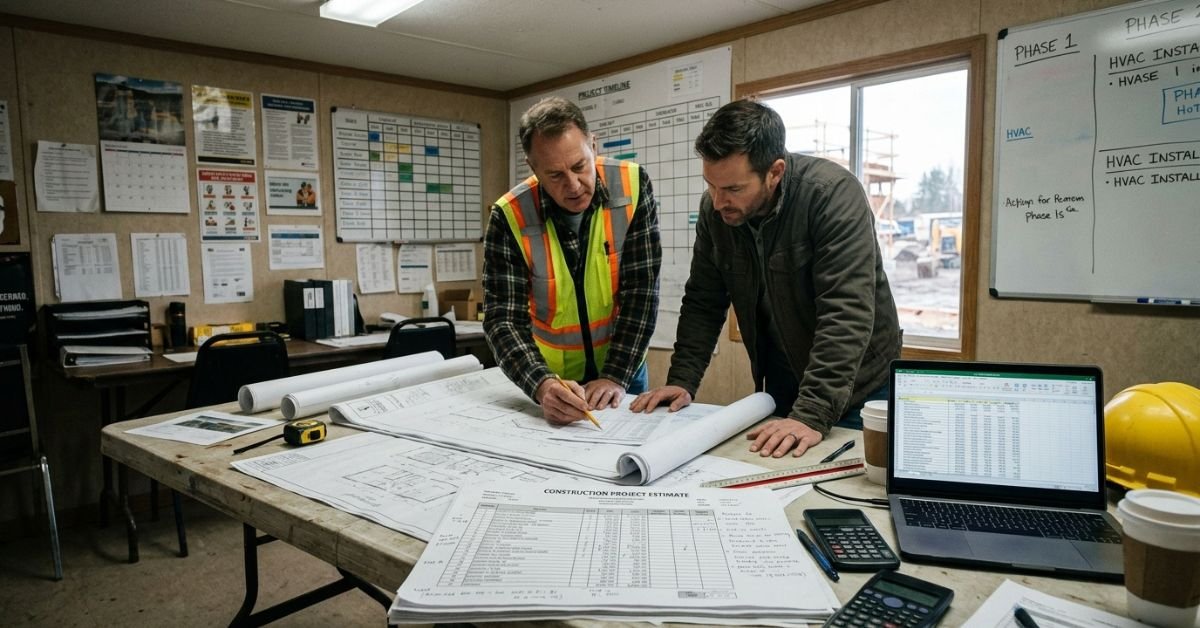
Every construction project starts with a plan, but turning that plan into a completed building requires careful coordination, accurate calculations, and consistent project management. Contractors must understand the scope of work, estimate material requirements, organize labor, coordinate suppliers, and keep construction activities moving according to schedule.
When these responsibilities are handled without reliable information, small mistakes can create expensive problems. A missing material quantity may affect the budget, while a delayed activity can disrupt several trades working on the same project.
For this reason, many construction companies rely on professional CPM Scheduling Services and Construction Takeoff Services to improve their planning processes. These services provide different types of information, but both help contractors prepare for the challenges that arise before and during construction.
Why Construction Projects Need a Strong Planning Process
Construction work involves multiple activities that must be completed in a particular order. Before a building can reach the finishing stage, contractors may need to complete excavation, foundations, structural framing, roofing, mechanical installations, electrical work, and interior finishes.
Each phase has its own labor requirements, materials, equipment, and deadlines. A problem in one area can affect other parts of the project.
For example, if a structural contractor falls behind schedule, mechanical and electrical subcontractors may have to adjust their planned work. If essential equipment arrives late, installation and testing may be delayed. These disruptions can increase labor costs and make it more difficult to meet contractual deadlines.
A structured planning process helps identify dependencies, estimate resource requirements, and establish realistic expectations.
Rather than waiting for problems to appear on-site, contractors can use estimates and schedules to anticipate what will be needed and when.
What CPM Scheduling Services Bring to a Construction Project
The Critical Path Method (CPM) is a scheduling approach that helps project teams organize activities, establish dependencies, and determine the sequence of work that controls the earliest possible project completion date.
Professional CPM Scheduling Services help contractors turn project requirements into an organized timeline. This timeline provides a reference for planning, coordination, progress monitoring, and communication with project stakeholders.
A construction schedule typically includes activity descriptions, estimated durations, start and finish dates, milestones, and relationships between tasks. Depending on the project’s requirements, it may also include procurement activities, inspections, testing, commissioning, and contractual deadlines.
Consider a contractor responsible for a new apartment building. The project may involve excavation, foundation construction, concrete work, framing, building enclosure, plumbing, electrical installations, HVAC systems, and interior finishes.
These activities cannot be scheduled independently without considering their relationships. Certain work must be completed before other trades can begin, while some activities may proceed simultaneously when site conditions allow.
A CPM schedule helps organize these relationships into a workable plan.
Identifying Work That Controls the Completion Date
One of the main benefits of CPM scheduling is identifying the critical path.
The critical path consists of activities that determine the project’s earliest possible completion date based on the schedule logic and durations. Delays to these activities can affect the overall deadline unless the schedule is adjusted or time is recovered elsewhere.
Suppose a building’s structural work is scheduled to finish before several follow-on activities can proceed. If structural completion falls behind, the project manager needs to understand how that delay affects the remaining timeline.
Possible responses might include adjusting resources, changing the sequence of certain activities, or coordinating work that can safely proceed in parallel.
The appropriate response depends on site conditions, contractual requirements, available labor, and the technical relationships between activities.
By understanding the critical path, contractors can focus attention on the work that has the greatest influence on project completion.
Improving Communication Between Project Teams
A construction schedule is also a communication tool. It helps project managers explain upcoming activities, coordinate subcontractors, and establish expectations for material deliveries.
When everyone works from a consistent schedule, it becomes easier to identify conflicting activities and clarify responsibilities.
Regular progress meetings can use the schedule to review completed work, discuss upcoming milestones, and identify activities that may require corrective action.
This creates a more organized approach to project coordination than relying entirely on informal updates.
Construction Takeoff Services and Their Role in Accurate Estimating
Before a contractor can calculate a reliable project price, the company needs a clear understanding of the quantities involved.
Construction Takeoff Services provide this information by measuring and calculating material quantities from architectural drawings, structural plans, specifications, and relevant trade documents.
Depending on the project, takeoffs may cover concrete, reinforcing steel, lumber, drywall, roofing, flooring, insulation, doors, windows, electrical materials, plumbing components, and mechanical systems.
The resulting quantity breakdown gives estimators a foundation for preparing project budgets and bids.
For example, a concrete subcontractor needs to determine the volume of concrete required for footings, slabs, walls, and other specified elements. A framing contractor needs to identify the quantities of lumber or metal framing components needed for the building.
An electrical contractor may need quantities for conduit, wiring, fixtures, and other specified components, depending on the required level of takeoff detail.
Each trade has different measurement requirements. A useful takeoff must reflect the drawings, specifications, measurement rules, and scope of work relevant to that assignment.
Reducing Errors Before They Reach the Jobsite
Quantity errors can affect more than the estimating spreadsheet. They may influence purchasing, storage, delivery planning, labor requirements, and construction progress.
If a contractor underestimates materials, the company may need additional orders that increase costs or delay installation. If quantities are significantly overstated, the business may tie up money in materials that are not immediately needed.
Professional takeoffs help reduce these risks by organizing measurements and making them easier to review.
However, quantities should always be checked against the available documents. Missing dimensions, conflicting specifications, and unclear drawing details may require clarification before the estimate can be finalized.
Accurate quantity calculations are an important part of estimating, but they must be combined with appropriate pricing, labor calculations, overhead, and other project-specific costs to produce a complete bid.
Connecting Construction Takeoffs With Project Scheduling
Estimating and scheduling become particularly valuable when their information is coordinated.
Construction takeoffs help determine the quantities required for different parts of the project. CPM scheduling helps establish when those parts of the project are expected to take place.
Together, they support a more organized approach to procurement and resource planning.
Imagine a general contractor preparing to build a medical office. The estimating team calculates quantities for