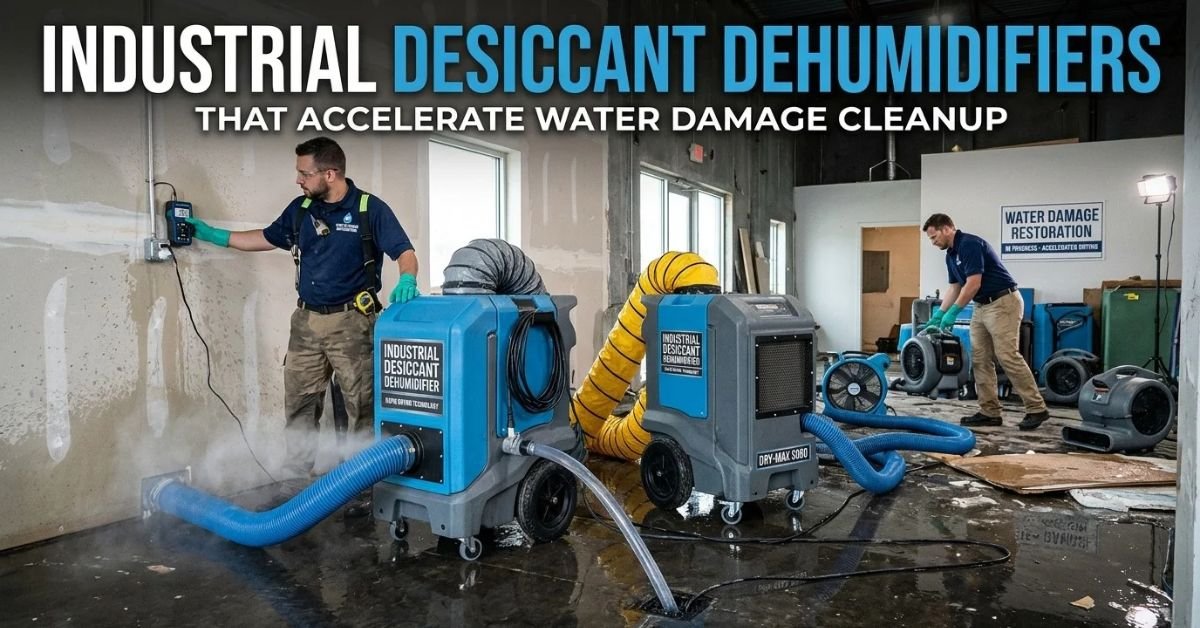
After a severe storm or plumbing failure in a Miami high-rise, residents and property managers often face soaked drywall, warped flooring, and the threat of mold. In these towering structures, moisture migrates quickly between floors and into hidden spaces, leaving standard fans and portable dehumidifiers unable to keep up. Delays in removing moisture can escalate repair costs, extend downtime, and create unhealthy living conditions. Industrial desiccant dehumidifiers, designed for high-volume moisture extraction, have become essential for restoring high-rise buildings to a safe and dry state in Miami’s humid, tropical climate. These machines accelerate water damage cleanup by pulling deep-seated moisture from building materials, minimizing structural damage, and reducing the risk of future problems.
Miami High-Rise Water Damage Challenges Involving Tropical Climates
High-rise Water Damage Cleanup in Miami, FL comes with unique hurdles due to the city’s year-round high humidity and frequent heavy rains. When water intrudes, moisture doesn’t just linger on surfaces—it penetrates concrete, drywall, and insulation, and persistent humidity can slow natural drying to a crawl. In a tropical environment, damp materials become breeding grounds for mold and bacteria within days if not addressed aggressively.
Elevated moisture levels in Miami’s atmosphere mean that traditional refrigerant dehumidifiers often struggle to achieve the low humidity levels necessary for thorough drying. The stack effect in high-rise buildings—where warm, humid air rises through elevator shafts and stairwells—further complicates moisture migration and containment. Addressing these factors requires equipment capable of operating efficiently in both high moisture and high-temperature conditions, as detailed in humidity control in tropical climates.
Industrial desiccant dehumidifiers are engineered to perform in exactly these scenarios. By chemically absorbing water vapor from the air, they maintain drying cycles even when ambient humidity is extreme, making them a critical tool for tackling water damage in Miami high-rises.
Mechanics of Industrial Desiccant Dehumidifiers for Rapid Structural Drying
Unlike standard dehumidifiers that cool the air to condense moisture, industrial desiccant dehumidifiers use a wheel or rotor coated with a moisture-absorbing material—typically silica gel. As air passes through the machine, water vapor adheres to the desiccant, and a separate heated airstream regenerates the wheel by releasing moisture outside the building. This continuous cycle makes desiccant units especially effective at extracting deeply embedded moisture from porous materials like gypsum board and wood framing.
For high-rise Water Damage Cleanup in Miami, FL, this method enables crews to dry out affected floors, walls, and cavities quickly, even when outside air remains muggy. These units can maintain target humidity levels under 40%, a threshold proven to halt mold growth and accelerate evaporation from structural components. The process is outlined in industrial dehumidification system design, which explores capacity selection and operational guidelines for large-scale drying projects.
Because industrial desiccant dehumidifiers can be ducted to distribute dry air across multiple floors or isolated rooms, restoration teams achieve more uniform results and minimize the risk of lingering pockets of moisture that could lead to future issues.
Deploying Heavy-Duty Moisture Control Equipment in Vertical Architecture
High-rise buildings introduce logistical challenges for water damage cleanup, especially when moving heavy equipment to upper floors. Industrial desiccant units, which often require external venting and robust power supplies, must be staged strategically to maximize airflow and efficiency. Restoration professionals typically position these machines in service areas or mechanical rooms, using flexible ducting to reach affected spaces without disturbing residents or critical systems.
Proper placement ensures that dry, conditioned air reaches interior wall cavities, ceiling voids, and other areas where moisture may be trapped. For large-scale losses, multiple machines may be linked to cover entire floors or adjacent apartments. Quick mobilization of this equipment is a key factor in the success of Water Damage Cleanup in Miami, FL, where prompt action can prevent extensive demolition and reconstruction. This type of service often incorporates industrial fans and negative air machines to support the dehumidifiers, creating a comprehensive moisture control system.
Restoration teams must also coordinate equipment deployment with building management to comply with noise restrictions, electrical load limits, and fire safety protocols. This ensures the drying process remains effective while keeping disruptions to a minimum for residents and commercial tenants.
Preventing Mold Growth Through Advanced Air Filtration and Dehumidification
In Miami’s humid climate, mold can begin to colonize water-damaged materials within 24 to 48 hours. Industrial desiccant dehumidifiers not only dry materials but also maintain indoor humidity at levels that inhibit mold spore activation. By pairing these machines with high-efficiency particulate air (HEPA) filtration systems, restoration teams capture airborne spores and contaminants released during demolition or drying.
Many advanced dehumidification setups integrate remote humidity sensors and continuous monitoring, allowing technicians to adjust settings and confirm that drying goals are met before equipment is removed. This level of control is especially important in high-rise buildings, where moisture can migrate between units and cause hidden damage if left unchecked.
Routine monitoring and targeted dehumidification, as explained in mold prevention in water-damaged buildings, help ensure that once the visible water is gone, the structure remains safe and healthy for occupants. This approach is critical for preventing recurring mold issues and protecting the building’s long-term value.
Conclusion
Choosing industrial desiccant dehumidifiers is the most effective way to accelerate drying and limit secondary damage after water incidents in Miami high-rises. Consult a professional restoration provider experienced with large-scale, vertical building projects to ensure rapid response and the right equipment for your situation.