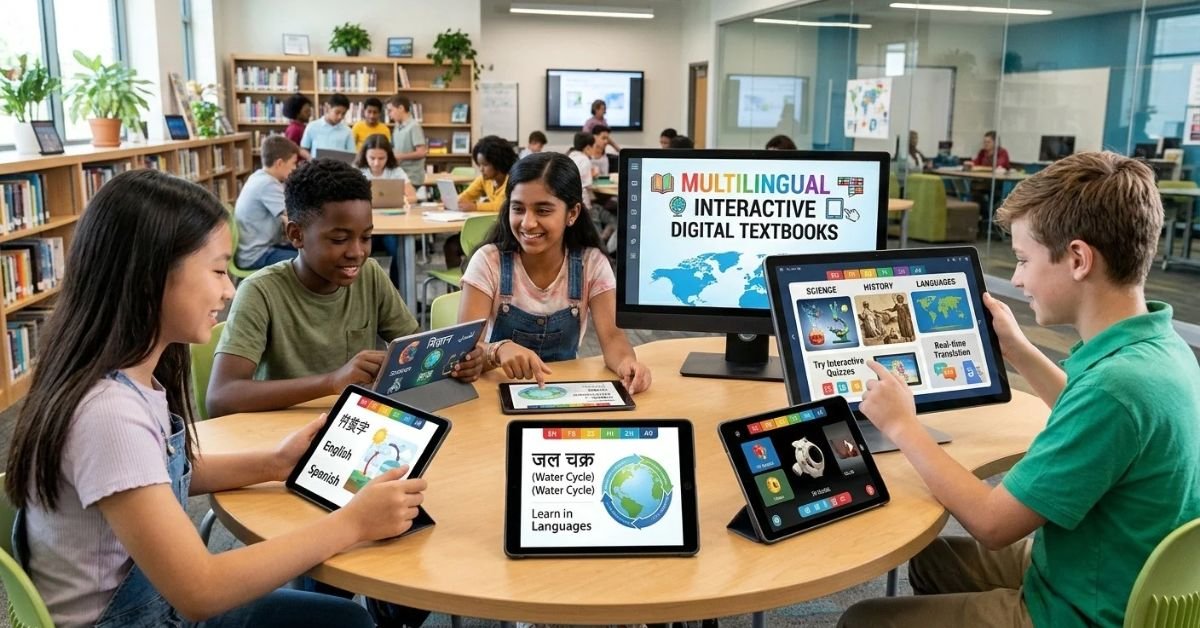
A publisher expanding a textbook into another language needs more than translated paragraphs. Audio may need re-recording, images may contain embedded labels, answer feedback must be localized, and a longer phrase can break a page layout. Some languages also require a different reading direction. Choosing a development partner means testing the full learning experience in each target language.
What Does Multilingual Production Involve?
Separate the source text from images and interface controls where possible. Keep a structured list of instructions, answers, feedback, and captions. Then check typography, line length, search, navigation, and screen-reader behavior in the finished product. A pilot should use real translated content rather than filler text.
A language version is also a new edition
A publisher needs a way to correct one language without accidentally changing others. Ask how shared illustrations and media are reused, how language-specific audio is managed, and how teachers and students choose the correct edition. Rights to translations and recordings should be documented.
Four Providers to Investigate
1. Euphoria Digital
Best for: publishers seeking a tailored multilingual book or platform.
Euphoria Digital describes interactive books and learning platforms. Its published portfolio and testimonials include digital-book work in a right-to-left language. That is a useful reason to ask for a multilingual demonstration, but a publisher should verify support for its exact language pair, typography, text direction, audio, and editorial workflow in a sample chapter.
2. Mozaik Education
Best for: publishers interested in multilingual use within its wider ecosystem.
Mozaik’s publisher material discusses localization and support for right-to-left publications. Request a demonstration of your actual script and an explanation of which interface elements your team can translate.
3. Kotobee
Best for: teams wanting to manage translated editions in an authoring environment.
Kotobee’s tools offer multilingual publishing possibilities. Check the current authoring product and output format against your exact requirements; a general language-support statement does not prove that complex activities, search, or audio work in every script.
4. Ascendia
Best for: educational organizations producing localized lessons through an authoring workflow.
Ascendia describes LIVRESQ as supporting multiple languages. Ask how complete textbook series are versioned and whether teachers can switch editions without losing their place or assignment history.
What to Include in the Vendor Test
Provide the same complex lesson in two languages, including a diagram label, audio, one quiz question, and explanatory feedback. If relevant, include a right-to-left passage and numbers in the same sentence. Test a phone, a classroom screen, and the editorial process for correcting only one translation.
Inspect More Than the Reading Direction
Localizing an interactive book affects interface labels, search, line breaks, audio, feedback, and sometimes the order of illustrated steps. Right-to-left content can be especially revealing: a page may render correctly while a quiz control, chart label, or navigation button remains in the wrong direction. Include mixed scripts, numbers, and punctuation in the test material if they appear in your books.
Ask who reviews each language. A developer can make the interface display text, but a subject editor must check terminology and answers. If an exercise depends on a pun, pronunciation, or local example, it may need adaptation rather than translation. Define which changes are shared between editions and which are local.
Plan the Translation Workflow
Give vendors a change scenario: the source-language answer key is corrected after all versions have launched. How is that change flagged to translators? Can editors see which versions have been updated? Does the publisher approve each edition independently? Ask for an estimate of the work involved in adding one more language after the original build.
A multilingual project also needs a clear rights inventory. Audio recordings, illustrations containing words, and translated content may have separate licenses. Confirm which assets the publisher may reuse in future editions and platforms. A sample chapter should include a complex page, media, an assessment, and teacher instructions in both languages. If those parts work and can be revised predictably, the vendor has demonstrated much more than a translated menu.
Final Verdict
Euphoria Digital, Mozaik, Kotobee, and Ascendia offer different routes to multilingual educational content. Shortlist by your exact languages and production model, then judge the working pilot. The best provider can maintain accurate, usable parallel editions after the first translation is published.