
Audio production has traditionally involved several separate stages. A creator may begin with a script, record dialogue, search for suitable music, collect sound effects, create background ambience, synchronize everything with video, and then spend additional time adjusting the final mix. For professional studios, this can be a well-organized process supported by dedicated specialists. For independent creators and smaller teams, however, managing every stage can become difficult as the number of projects increases. Seedaudio 2.0 introduces an AI-powered approach that brings different audio creation capabilities into a more connected workflow, including dialogue, music, ambience, sound effects, reference audio, and video-based generation.
The changing nature of digital content makes workflow efficiency increasingly important. Creators are expected to publish more frequently across multiple platforms while maintaining a consistent standard of quality. A single video may need several revisions before it is ready, and successful concepts may later need to be adapted into new formats or languages. When audio production depends entirely on lengthy manual processes, these demands can slow down the entire content pipeline.
AI does not remove the need for creative decisions, but it can change where creators spend their time. Instead of focusing primarily on collecting and assembling every individual audio component, they can spend more time deciding what the content should communicate, how it should sound, and which version best supports the overall idea. This shift can make audio production more experimental, organized, and adaptable.
Why Modern Creators Need Better Audio Workflows
The volume of digital content has increased dramatically across social platforms, websites, streaming services, online courses, advertising campaigns, and interactive media. A creator who once produced one polished video every few weeks may now need to produce several pieces of content every week.
This creates pressure on every part of the production process. If audio takes too long, it can delay editing and publishing. If creators rely on a collection of unrelated tools, moving between them can introduce additional complexity. A more connected workflow can help reduce some of these difficulties by allowing different audio requirements to be considered within the same production environment.
Starting With the Creative Objective
A smarter workflow begins before any audio is generated. Creators first need to understand what the project is trying to achieve. Is the content educational, emotional, promotional, entertaining, dramatic, or informational? What should viewers remember after hearing it?
These questions influence almost every audio decision that follows. An educational video may need highly intelligible narration, while a dramatic sequence may depend more heavily on atmosphere and music. A product demonstration may require a carefully balanced combination of voice and supporting effects.When the creative objective is clear, AI generation becomes a tool for exploring solutions rather than a replacement for planning.
Turning One Idea Into Several Audio Possibilities
Traditional production often encourages creators to commit to one approach early. Once a voice has been recorded or a soundtrack has been selected, changing direction can require additional work.AI generation can make experimentation more accessible. Creators can explore different emotional directions, voice styles, musical atmospheres, or environmental concepts before deciding which version should move forward.
This can be particularly valuable during the early stages of a project. Instead of asking whether one specific audio idea works, creators can compare several possibilities and choose the one that fits the visual and narrative direction most effectively.
Building a Repeatable Production Process
A repeatable workflow is especially important for creators who produce content regularly. Without a consistent process, every project can become a new collection of small decisions, making production slower over time.A structured workflow can begin with planning the script and visuals, identifying the required audio components, generating initial material, reviewing the results, refining individual elements, and finally integrating everything into the finished production. The exact steps can change depending on the project, but the overall structure remains consistent.
This makes it easier to manage larger content libraries. Once creators know how they want to approach audio, they can spend less time figuring out the process and more time improving the creative result.
Audio Components to Consider Before Production
Different projects require different combinations of audio. Identifying these requirements early can prevent creators from discovering missing elements during the final editing stage.
- Narration or dialogue: Determine what information needs to be communicated through speech.
- Voice direction: Decide the appropriate tone, emotion, rhythm, and delivery style.
- Music: Establish whether the project needs a subtle background layer or a more prominent musical identity.
- Ambience: Consider what environmental sounds should exist naturally within the scene.
- Effects: Identify actions or transitions that require additional audio emphasis.
- Timing: Determine which audio events need to correspond with specific visual moments.
- Track organization: Keep major audio components separated when future revisions are likely.
- Quality review: Plan time for listening, comparing, and refining generated results.
This planning stage may seem simple, but it can prevent a great deal of unnecessary editing later. When creators know what they need before generation begins, they can evaluate results according to a clear objective.
Making Revisions Easier
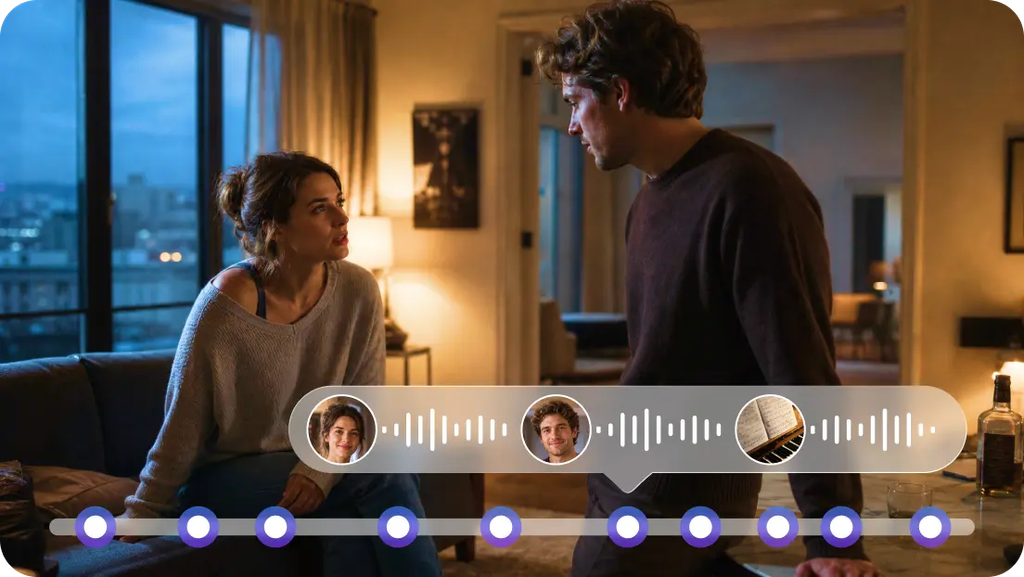
Revision is a normal part of content production. A client may request a different voice, an editor may change the pacing of a video, or the creator may decide that the original music does not match the final cut.Audio becomes difficult to revise when everything has been permanently combined into one layer. A small change can require rebuilding a large section of the project.
The official information for Seedaudio 2.0 describes multi-track generation that can separate dialogue, music, environmental ambience, and sound effects, with timing controls for placing different elements. This type of organization can make it easier to think about audio as individual components that can be refined according to changing production needs.
Seedaudio 2.0 and a More Connected Production Approach
An integrated audio workflow can change the relationship between different production stages. Instead of creating dialogue separately from music and effects, creators can consider how these components should interact within the same scene.
The official product information describes support for text-to-audio, audio-to-audio, and video-to-audio workflows. It also describes the ability to generate complete audio containing dialogue, emotion, music, ambience, and sound effects from a single prompt.
This does not mean that every project should be generated in one step. In many cases, creators may prefer to generate different elements separately and refine them individually. The important advantage is having multiple workflow options depending on the complexity of the project.
Using Video as a Production Reference
Visual editing often contains information that is difficult to communicate through a written description. A video shows exactly when an object moves, when a character changes expression, when a scene transitions, and how quickly the story progresses.
Using video as a reference can therefore provide valuable context for audio generation. The official product description states that video-to-audio generation can create dubbing, music, ambience, and sound effects corresponding to visual content, mood, pacing, and storyline.
For creators, this can reduce the gap between visual and audio production. Instead of developing the soundtrack without seeing the final movement, they can use the video itself as part of the creative input.
Managing Consistency Across a Content Library
Consistency becomes more difficult as a creator’s content library grows. A single video may sound excellent, but audiences may notice when the next video suddenly uses a completely different voice or audio style without a clear reason.
This does not mean every video needs identical audio. Instead, creators can establish broad rules around their content identity. They might maintain a particular narration style, musical atmosphere, pacing approach, or relationship between dialogue and background sound.
Reference-based generation can support this type of consistency by allowing creators to work from existing audio material. The official description notes that reference audio can be used to influence voice characteristics such as tone, accent, emotion, style, rhythm, and speed.
Using AI Audio in Team-Based Projects
Audio production is not always handled by one person. A marketing team may include writers, video editors, designers, and project managers, while a larger production may involve several specialists.A structured audio workflow can make communication between these roles easier. The writer can focus on the message, the editor can focus on timing, and the creative lead can evaluate whether the overall audio direction matches the project’s objectives.
When audio components are clearly organized, revisions can also be communicated more precisely. Instead of requesting that the entire soundtrack be changed, a team member can identify whether the issue is with dialogue, music, ambience, effects, or timing.For creators who want to experiment with AI-powered audio and discover new ways to bring their ideas to life, Dreamina offers a practical space to explore different creative possibilities.
Exploring More Ideas Without Increasing Production Pressure
Creative experimentation can sometimes disappear when production schedules become tight. A creator may have several ideas for a soundtrack but choose the first acceptable option because there is not enough time to test alternatives.
AI generation can reduce some of that pressure by making experimentation faster. Creators can explore different directions and quickly determine which ideas are worth developing further.
This can be particularly valuable during concept development. A project does not need to have a finished soundtrack before the creator understands its potential. Early audio experiments can help establish the personality of a scene and may even influence later visual decisions.
Supporting Different Content Formats
A single creative idea may eventually appear in several formats. A long video might be transformed into short clips, an advertisement may become social media content, or an educational lesson may be divided into several smaller episodes.
Each format can require different audio decisions. A short clip may need a faster introduction, while a longer version can allow more room for atmosphere. A vertical social video may prioritize immediate narration, while a longer production can spend more time developing a musical mood.
A flexible workflow allows creators to adapt audio according to the format without abandoning the central creative concept.
Using AI for Exploration Rather Than Automatic Finalization
One of the most useful ways to approach AI audio is to treat it as a creative partner during exploration. The generated output can provide a foundation, an alternative interpretation, or a starting point that the creator later refines.
This approach keeps human judgment involved throughout the process. Creators still decide whether a voice sounds appropriate, whether the music supports the scene, whether an effect is necessary, and whether the final result communicates the intended message.
The technology becomes most useful when it expands the number of possibilities a creator can consider without making the production process unmanageable.
Reviewing Audio With the Complete Project
Audio should not be judged only as an isolated file. A voice may sound excellent by itself but become difficult to understand once music and effects are added. Similarly, an environmental layer may feel subtle when heard alone but become distracting when combined with dialogue.
The final review should therefore take place while watching the complete video. Creators should listen for clarity, timing, emotional consistency, volume balance, and continuity between scenes.
This stage is also where small problems can be discovered. A transition may need a different effect, music may need to become quieter during dialogue, or a particular voice delivery may need another variation.
Scaling Production Without Losing Quality
The ultimate challenge for many creators is scaling. Producing more content is only useful if quality remains consistent.
A repeatable AI-assisted workflow can help creators handle a larger volume of work by reducing repetitive production tasks and making experimentation easier. However, scaling should not mean publishing every generated result without review.
Quality control becomes even more important as production increases. Creators need clear standards for voice quality, timing, sound balance, and creative consistency. A faster workflow should create more room for creative decisions, not remove them.
Final Thoughts
Modern audio production is moving toward workflows that are more flexible, connected, and adaptable. Creators no longer have to think about dialogue, music, ambience, and sound effects as completely isolated stages. Reference material, video context, expressive voice controls, and multi-track generation can allow different elements to be developed around the same creative objective.
AI can also make experimentation easier. Instead of spending most of the production process searching for individual assets or rebuilding recordings whenever an idea changes, creators can explore different possibilities and then refine the direction that works best. This can be valuable for both independent creators and teams producing content at a larger scale.
The most effective workflow will still depend on human creativity. AI can provide options, but the creator determines which option fits the story, audience, brand, or project. By combining structured planning with flexible generation and careful review, modern creators can build audio production processes that are faster without becoming careless, and more scalable without losing their creative identity.
FAQs
What makes an AI audio workflow useful for modern creators?
A flexible workflow can bring different audio tasks closer together, allowing creators to experiment with dialogue, music, ambience, sound effects, and reference material without treating every component as a completely separate production.
Can audio be generated from video content?
Yes. Video-to-audio generation can use visual material as a reference for producing dubbing, music, ambience, and sound effects related to the video’s visual content, mood, pacing, and storyline.
Does AI audio generation support separate audio tracks?
Yes. The official product information describes multi-track generation for elements including dialogue, music, environmental ambience, and sound effects, with timing controls.
Can creators use reference audio?
Yes. Reference-audio generation can be used to explore characteristics such as tone, accent, emotion, style, rhythm, and speed.
Why should creators review generated audio?
Reviewing the final result helps identify problems with pronunciation, timing, volume, emotional delivery, music balance, and synchronization with the visuals. AI generation provides a starting point, but final quality still requires creative evaluation.
Can AI audio help creators produce content at a larger scale?
It can support a more repeatable production process by making it easier to experiment with and develop different audio elements. However, scaling successfully still requires consistent quality standards and human review.
Is AI intended to replace traditional sound design completely?
Not necessarily. AI can provide new production options, but traditional editing, creative direction, mixing, and human judgment can remain important depending on the complexity and requirements of a project.
1 thought on “How Seedaudio 2.0 Is Building a Smarter Workflow for Modern AI Audio Production”