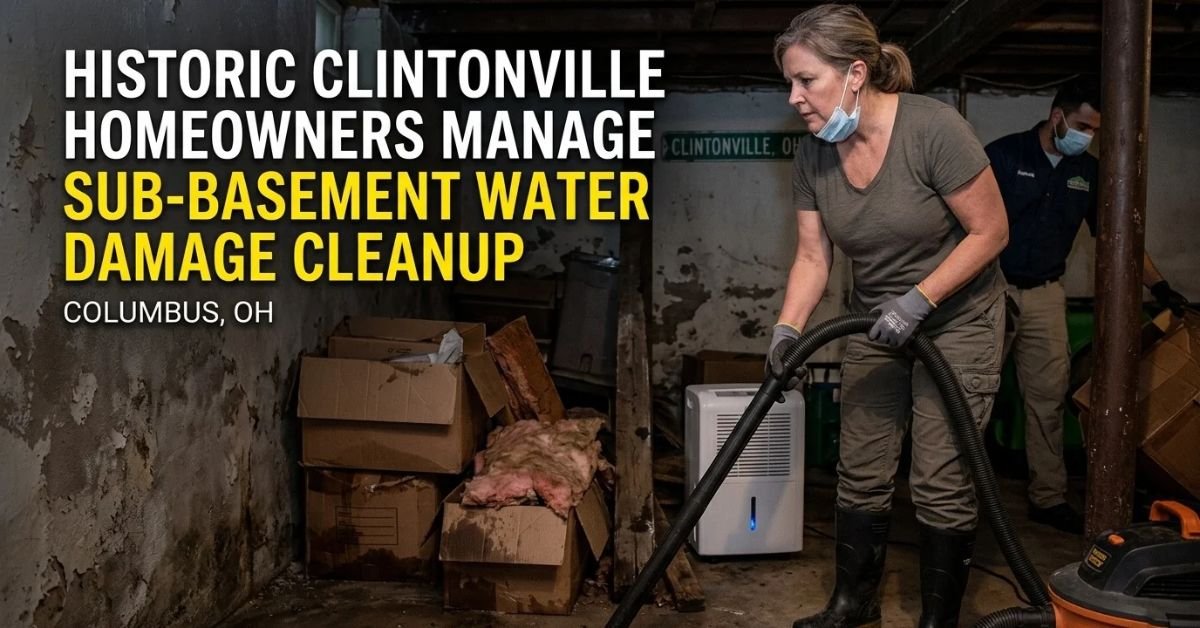
In the heart of Clintonville, Columbus, many historic homes feature sub-basements—spaces partially or fully below ground level, often constructed with fieldstone or early concrete. When a sudden heavy rain or rising groundwater seeps through these aging foundations, homeowners face much more than a wet floor. Water can quickly saturate brick, stone, and mortar, threatening historic wood beams and original flooring above. For residents of these older neighborhoods, managing basement Water Damage Cleanup in Columbus, OH is about more than just drying out a room; it’s about preserving both the home’s structural strength and its history. Swift, targeted action and specialized restoration methods are needed to keep these distinctive properties safe and intact.
Challenges of Sub-Basement Flooding in Historic Clintonville Properties
Sub-basements in Clintonville’s historic homes present unique vulnerabilities because many foundations were built before the adoption of modern waterproofing techniques. Fieldstone walls and porous mortar, common in early 20th-century construction, allow water to enter more readily than poured concrete. This intrusion can erode the base and promote hidden mold growth between layers of stone and wood.
Original drainage systems, if present, often lack sump pumps or modern vapor barriers. Without these protections, even minor leaks can escalate into full-scale flooding during severe storms. The risk increases when downspouts and exterior grading direct water toward the house, compounding the challenge for homeowners tasked with basement water damage cleanup Columbus OH.
Remediation is complicated by the need to preserve historic materials. Removing water without damaging original flooring or trim requires specialized equipment and gentle drying processes. Guidance on best practices for flood cleanup in historic buildings helps homeowners make informed decisions that balance preservation with effective restoration.
Immediate Mitigation Steps for Columbus Homeowners After Water Intrusion
When water enters a sub-basement, the first priority is halting further damage. Shutting off electrical circuits to the affected area reduces the risk of shock or fire, especially where old wiring is present. Homeowners should then remove standing water using wet/dry vacuums rather than sump pumps if the latter could disturb historic materials or foundations.
Salvaging irreplaceable features—such as original hardwood beams or hand-cut stone—requires careful removal of wet carpets and stored items to allow airflow. Positioning fans and dehumidifiers throughout the sub-basement helps dry the space, but it’s important to avoid rapid temperature changes that could crack plaster or warp wood. Detailed instructions on safe electrical practices after basement flooding are particularly relevant in older homes where systems may not meet today’s safety codes.
Once immediate steps are complete, documenting the extent of the water damage supports future restoration efforts. Photographs and notes assist both insurance claims and professionals tasked with assessing the best cleanup and repair approach for the home.
Professional Restoration Strategies for Aging Foundations and Drainage Systems
Restoring a historic Clintonville sub-basement after significant water damage requires expertise in both modern remediation and the care of aging structures. Restoration professionals use moisture meters to detect hidden dampness in stone and wood, ensuring repairs go beyond surface drying. For homes with fragile mortar or brickwork, low-pressure drying systems minimize the risk of cracking or shifting.
Specialized cleaning agents remove contamination while preserving original surfaces. In many cases, professionals also recommend upgrades to outdated drainage systems—including the installation of discreet sump pumps and French drains that can be hidden from view—to prevent future events. Engaging a local team experienced in Water Damage Cleanup in Columbus, OH ensures that restoration efforts respect both the technical and historical needs of each property. These crews blend traditional craftsmanship with modern drying and sealing techniques to stabilize structures for the long term.
By addressing both the visible symptoms and underlying causes of sub-basement flooding, restoration teams help Clintonville homeowners protect their investment and preserve the neighborhood’s architectural heritage.
Preventive Maintenance for Preserving Structural Integrity in Older Columbus Residences
Ongoing maintenance is critical for preventing future water damage in historic sub-basements. Regularly checking for hairline cracks in foundation walls and monitoring for musty odors helps catch problems before they escalate. Installing or updating gutter extensions and ensuring downspouts discharge water several feet from the foundation reduces hydrostatic pressure against the walls.
Applying breathable sealants to the interior of stone or brick basements allows moisture to escape without trapping it inside, which is key for older materials prone to decay. Homeowners may also schedule annual inspections with professionals who specialize in basement water damage cleanup Columbus OH, particularly after heavy storms or spring thaws.
Following guidelines for routine basement waterproofing maintenance enables residents to balance preservation with protection, ensuring their homes remain both safe and historically authentic for decades to come.
Conclusion
Homeowners in Clintonville’s historic neighborhoods should prioritize early detection and professional assessment when facing sub-basement water damage. Scheduling a specialized inspection after any intrusion can reveal hidden risks and help develop a targeted plan that safeguards both the structure and its original features.